
Allow me to introduce myself. I am Bleu, guardian of...
Read MoreWhat the Pasture Knows Before the Moon Is Full
Spetember 22, 2026
Owl Feather Farm, San Juan Island
The grass is different at night now. Cooler. Heavier with dew before its time. Cereus notices it first — he notices everything first — the way his ears turn toward the tree line a beat before anything actually moves there.
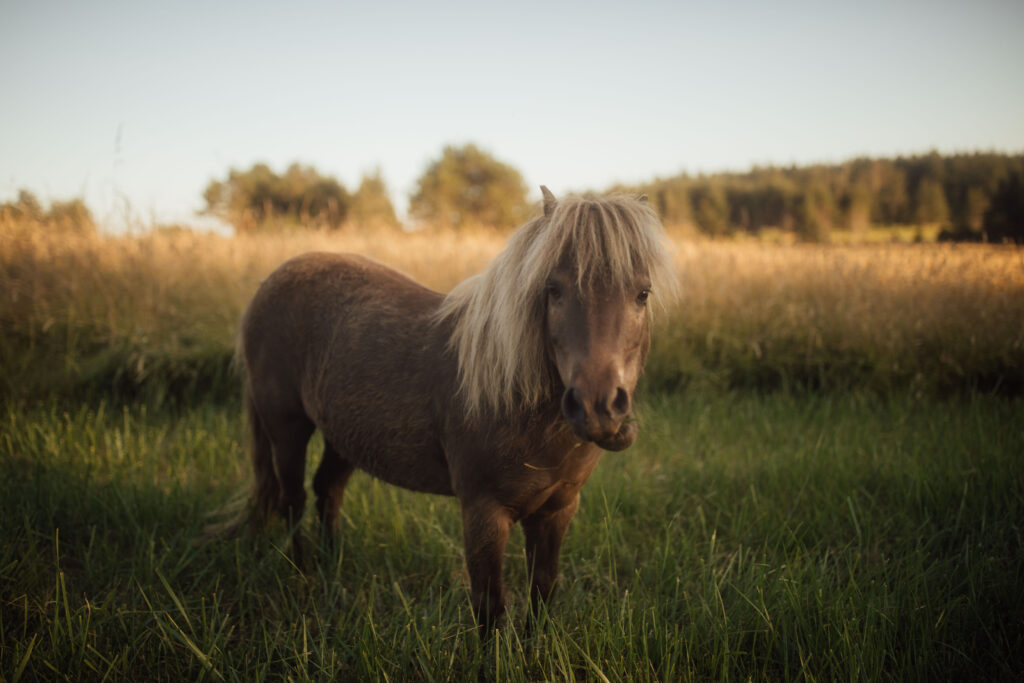
I’m Lil’ CoCo Nut, and I notice it too, in my own way. A held breath in the air, a kind of stillness that wasn’t here in the height of summer.
Something is coming. We can feel it in our hooves before we can name it.
The Moon That Keeps Its Word
Here’s the strange thing we’ve both started noticing this week: The moon has been rising at almost the same time, night after night, instead of drifting later the way it usually does. Cereus says this only happens once a year, right around now, and that it has a name for exactly that reason. They call it the Harvest Moon this time of year — some call it the Corn Moon — and it earns that name by rising early enough, several evenings in a row, that it used to light the fields for farmers working late to bring in their crops before the frost came.
We’re not farmers. But we understand the feeling of the light stretching a little further into the evening, giving everyone just a bit more time before the dark settles in for good.
It hasn’t gone full yet. That happens on the 26th, four days after the light and dark split evenly and the season officially turns toward autumn. But we’ve noticed the moon keeping its promise already, rising steady and early, the same time each night this week, as if it’s counting down alongside us.
The Grass Remembers Longer Than We Do
Cereus has seen more of these turning seasons than I have. He carries himself the way an old soul does — patient, watchful, never in a hurry to prove anything. When the wind shifts and the light starts arriving lower in the sky, he doesn’t spook or startle the way he might have as a colt. He simply plants his feet a little more firmly, as if to say: I know this part. I’ve done this before.
I haven’t done this before. Not really. Not the way he has. But I’m learning to trust that the ground under my hooves doesn’t shift as much as it feels like it might, even when the season around us is clearly changing shape.
What We Carry Without Knowing It
I used to bolt from hands I didn’t trust. I used to flinch at sounds that meant nothing, brace for things that were never actually coming. Anyone who knew me a couple of years ago remembers that Shetland pony who wouldn’t come near the fence at all. Cereus watched all of that happen without ever once telling me to hurry up and get over it.
He just stayed. Steady, unbothered, close enough that I eventually noticed: Nothing bad was happening in his stillness. Maybe nothing bad had to happen in mine either.
I think that’s part of what this turning season stirs up in the pasture. Whatever we’ve been carrying quietly — old fear, old bracing, old habits of flinching before we even know why — this is the time of year it rises closer to the surface, whether we’re a horse, a Shetland pony, or a person standing at the fence line scratching our withers.
Mom says something similar happens to the humans who come to see her. That the body holds what the mind forgets, and that certain seasons have a way of loosening what’s been held too tightly for too long. I don’t fully understand the words she uses. But I understand the feeling. I’ve lived it myself, one held breath and one released one at a time.
Waiting Without Rushing the Waiting
Cereus taught me this part too: you don’t rush the moon any more than you rush trust. It arrives when it arrives, a little fuller each night, and there’s nothing to do in the meantime except stay present for the waiting itself. There’s no eclipse riding along with this one, Cereus tells me, no dramatic shadow crossing the light. Just the moon, arriving plainly and on schedule, which feels like exactly the kind of arrival worth trusting.
So that’s what we’re doing this week, Cereus and I. Not straining toward the full brightness that’s still a few nights off. Just noticing. The way the grass feels different under our hooves in the evening. The way the light lingers a little longer before it finally lets go, thanks to a moon that keeps showing up right on time. The way something in both of us — one old and steady, one still learning steady — seems to be quietly getting ready for whatever this Harvest Moon is bringing when it finally rounds out on the 26th.
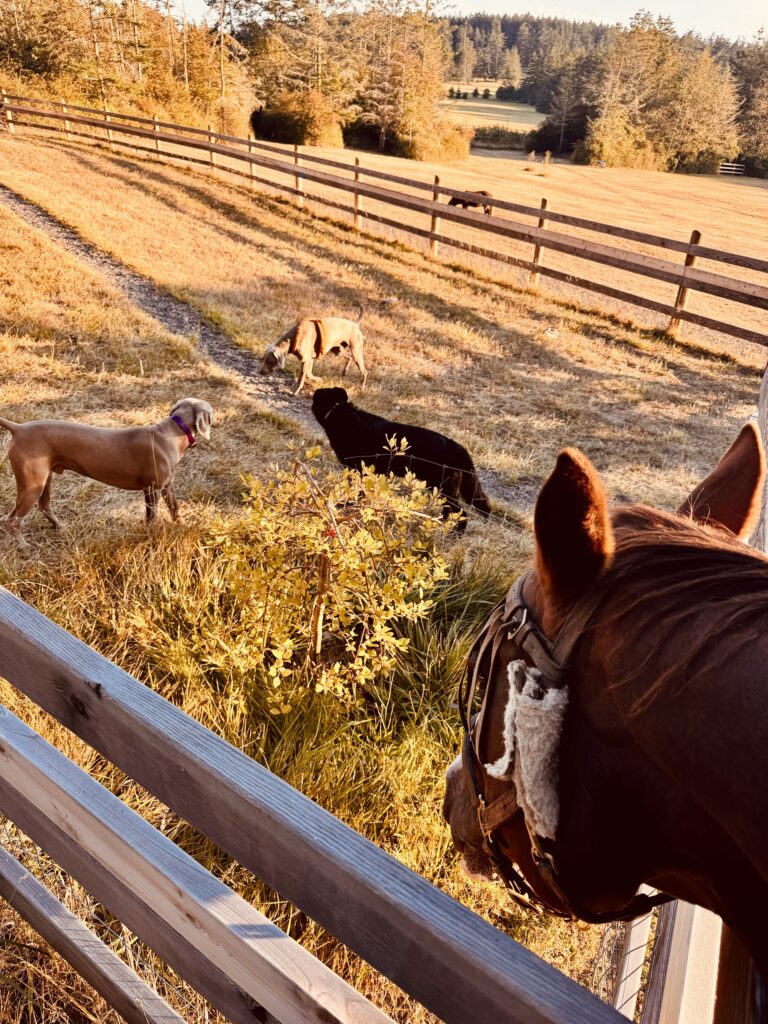
Mom comes to the fence most evenings now, and I lean into her hand the way I couldn’t always let myself do. Cereus stands a little apart, watching, the way gentlemen do. But even he leans in eventually. Everybody does, given enough patient evenings at the same fence line.
What the Fence Line Is Teaching Us
We don’t know exactly what this Harvest Moon will ask us to release once it finally arrives. Cereus probably has a better guess than I do. But we know this much: Whatever it is, we’ll meet it the same way we meet everything else out here, together, unhurried, one dusk at a time, following a moon that has never once broken its promise to rise steady and early when the season calls for it.
The moon isn’t full yet. But it’s close enough now that we’ve both started paying attention, ears turned toward the coming week the way Cereus turns his toward the tree line, waiting to see what shows up first.
If you’re feeling that same quiet build-up in yourself this week — the sense that something is loosening before you’ve named it yet — the fence line is always open. So is the door to the studio, if what you’re carrying needs a different kind of listening.
-Nicollé Lucas
Nicollé offers private sessions at Owl Feather Healing on San Juan Island; for more information contact her at .
more articles
The Star Inside the Apple: Balance for Body, Spirit & Bond
A new moon in Libra arrived yesterday morning, and the...
Read MoreWhat the Pasture Knows Before the Moon Is Full
The grass is different at night now. Cooler. Heavier with...
Read More